
 Deutsch
 Français
 Español










Description
The Weather Balloon 2000 is our premium model for demanding projects with ambitious altitude goals. The number 2000 describes two values at once: the balloon envelope weighs 2,000 g (70.5 oz), and you can attach a payload of up to 2,000 g to it. This allows the balloon to reach an average burst altitude of around 38,000 m (23.6 mi) while offering enough lifting capacity for multiple cameras, measuring instruments and experiments. You can calculate how much helium you need for your payload with our free Helium Calculator.
Our Weather Balloons
- optimised for maximum flight altitudes
- 100% quality control
- incl. instructions and free helium calculator
- incl. tool for calculating the flight route


Applications of the Weather Balloon 2000
Altitude records and ambitious goals
If you want to go as high as possible, the Weather Balloon 2000 is the right choice. Many schools and teams use it to set their own altitude record or to beat an earlier flight with a smaller balloon. At almost 40 km, a large part of the ozone layer is already below the probe, and the sky appears deep black.
Research missions with many experiments
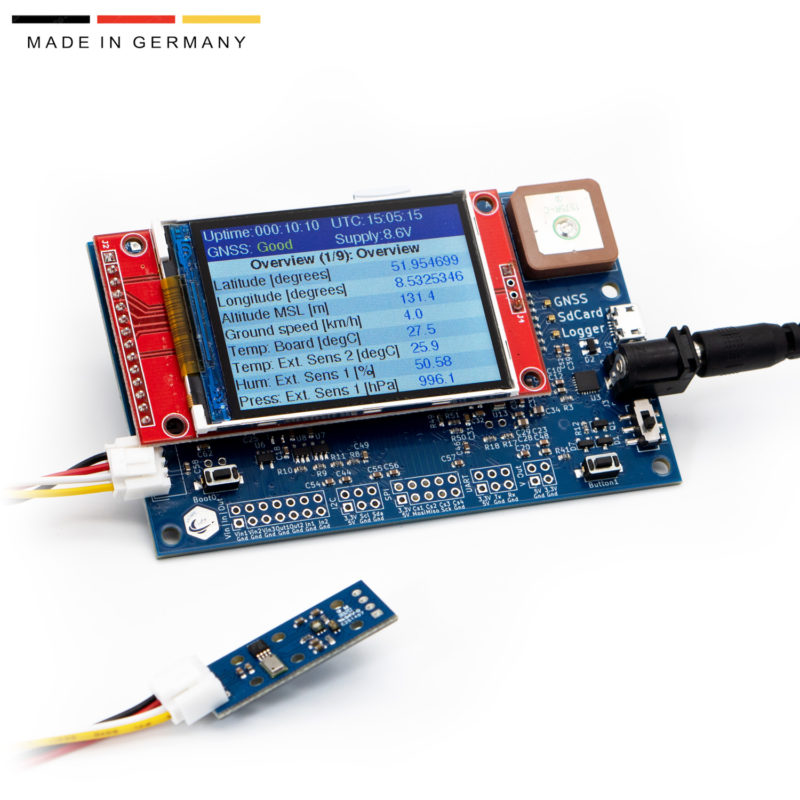
With up to 2,000 g of payload, several experiments can be carried into the stratosphere at once, for example from different student groups or research teams. A Datalogger STRATO4 records temperature, air pressure and altitude throughout the entire flight, and with the STRATOlab Experiment mount you can securely attach your experiments to the probe. For double-secured tracking, we recommend two GPS trackers, for example the STRATOfinder and the SPOT Trace.
Multi-camera flights at maximum altitude
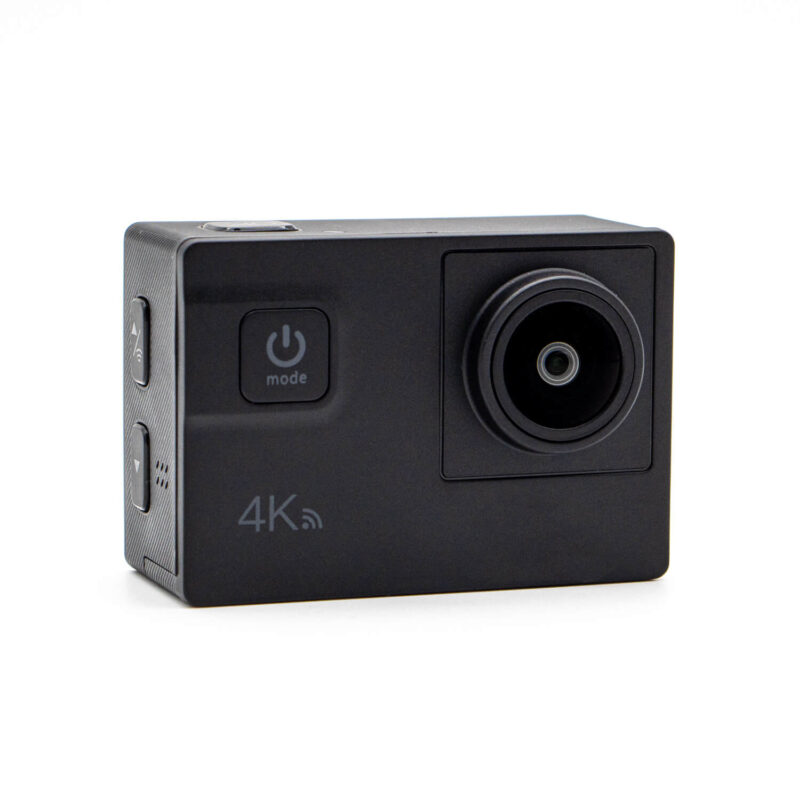
The Weather Balloon 2000 also easily carries several Space Cams with Batterypack. This lets you film your mission from different perspectives while collecting measurement data at the same time, without compromising on equipment.
School projects with repeat flights
Many schools start with a smaller balloon and switch to the Weather Balloon 2000 for their next project to fly higher and bring more experiments. Since all equipment except the balloon and helium can be reused, the first launch often becomes a tradition. You’ll find suitable classroom materials in our Teaching unit: Stratosphere Flight.
Does your payload fit?
With our Weather Balloon Kit configurator, you put together your probe step by step: you select the camera, measuring equipment, GPS tracker and experiments, and the configurator automatically calculates the payload and recommends the right weather balloon. You can also include your own experiments or additional electronics with a rough weight estimate. For payloads of this size, we recommend the Parachute 2500.
Which balloon suits your payload?
The Weather Balloon 2000 is the right choice for payloads of up to 2,000 g and for flights with especially ambitious altitude goals. If your probe is even heavier, choose the Weather Balloon 3000. For payloads of up to 1,600 g, our bestseller, the Weather Balloon 1600, is also sufficient, and for a single camera probe of up to 800 g, the more affordable Weather Balloon 800. For very light payloads of up to 200 g, such as radiosondes in amateur radio, the Weather Balloon 200 is the right fit.
Launching for the first time and want everything from a single source? The Weather Balloon Kit contains all the equipment for your mission except the helium. With the configurator, you can put together your own custom kit. Also remember to register your launch in advance; you’ll find all the information on our Registration & Insurance page.
Datasheet Weather Balloon (PDF)
Weather balloons compared
| Weather balloon | Payload | Burst altitude | Diameter | Helium | Ascent | Ideal for |
|---|---|---|---|---|---|---|
| Weather Balloon 200 | 200 g (7.1 oz) |
approx. 23,000 m (14.3 mi) |
approx. 3.0 m (9.8 ft) |
approx. 500 l (17.7 cu ft) |
approx. 75–95 min | Radiosondes, amateur radio, schoolyard experiments |
| Weather Balloon 800 | 800 g (28.2 oz) |
approx. 30,000 m (18.6 mi) |
approx. 7.5 m (24.6 ft) |
approx. 2,200 l (77.7 cu ft) |
approx. 100–125 min | Beginners, a single camera probe |
| Weather Balloon 1600 | 1,600 g (56.4 oz) |
approx. 36,000 m (22.4 mi) |
approx. 11.1 m (36.4 ft) |
approx. 4,400 l (155.4 cu ft) |
approx. 120–150 min | Multiple cameras, research flights, school projects |
| Weather Balloon 2000 | 2,000 g (70.5 oz) |
approx. 38,000 m (23.6 mi) |
approx. 12.5 m (41.0 ft) |
approx. 5,500 l (194.2 cu ft) |
approx. 130–160 min | Ambitious altitude goals, many experiments |
| Weather Balloon 3000 | 3,000 g (105.8 oz) |
approx. 40,000 m (24.9 mi) |
approx. 14.0 m (45.9 ft) |
approx. 8,300 l (293.1 cu ft) |
approx. 135–165 min | New altitude records, large research missions |
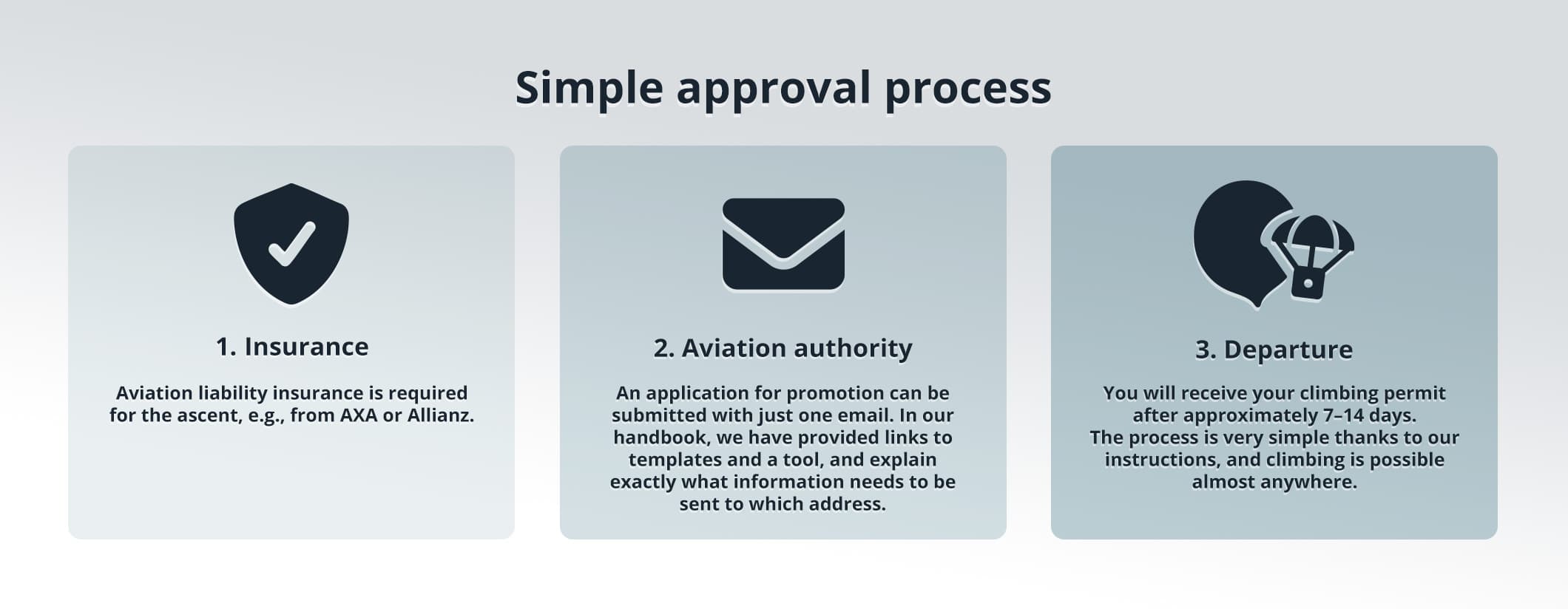
 Detailed instructions on filling the weather balloon and additional tips and tricks will be sent to you by email after the order has been placed.


















DAvid Zucker –
Der erste Flug an der Schule war ein voller Erfolg. Der Ballon hat eine Höhe von 35148 m erreicht. Lieferung innerhalb weniger Tage und bei Fragen rund um das Projekt immer schnellt zu erreichen.
Wird mit Sicherheit nicht das letzte Stratosphären-Projekt der Schule bleiben 🙂
Tom Schröder –
Liebes Team Stratoflights, diesen Sommer steht Flug #3 an! Die ersten zwei Projekte haben reibungslos geklappt, hoffen wir auf einen weiteren Erfolg und vielleicht stellen wir einen neuen Höhrenrekord mit dem 2000er auf 😉 Noch mal Danke für die sofortige Abwicklung und eure Bereitschaft bei Fragen! LG Tom Schröder
FundacionAstronomiaAstronauticaMallorca –
Muy buena oferta y equipamiento
Dr. Veeden –
Der Wetterballon 2000 hat unsere zweite Mission erfolgreich in die Stratosphäre befördert. Der Wetterballon wurde bereits im nächsten Tag per DHL geliefert, war ordentlich und sicher verpackt. Die Befüllanleitung hat das wesentliche gut zusammengefasst und die beschriebenen Texte wurden hervorragend durch Bilder begleitet. Mit 37.984,2 m haben wir mit dem Wetterballon 2000 einen neuen Schulrekord aufgestellt. Nächstes Jahr möchten wir, sofern es unser Budget hergibt, den Wetterballon 3000 nutzen, sodass wir noch Höher fliegen.
Glen Michaels –
Fast shipping. Good packaging and most importantly a high quality weather balloon with detailed instructions. It should be mentioned that especially your tutorial has been very helpful to me. Great idea, great store, great adventure. Thank you very much! Glen
Bertrand Drice –
We used this weather balloon for our schools project to lift some equipment and experiments. The weather balloon of Stratoflights is a high-quality one. After the order you get automatically the manual “How to fill a weather balloon”. We also used the STRATO3 and reached an altitude of about 39.791m. I can recommend the products and the fast and kindly service of Stratoflights. We will also use this products for future schools projects. Thank you, Drice