 Deutsch





How to register your weather balloon in the USA
Launching a weather balloon in the United States is very easy to handle. In fact, if you follow the requirements summarized here — based on the official legal text and our extensive experience from numerous weather balloon launches in the USA — you may not need to register your flight at all. This will apply to almost all of you.
Weather balloon launches in the United States are regulated by the Federal Aviation Administration (FAA) and the Federal Communications Commission (FCC). For most standard weather balloon launches in the USA, the applicable framework is defined in FAA Part 101.1. (Reference: https://www.ecfr.gov/current/title-14/chapter-I/subchapter-F/part-101)The FAA refers to weather balloons, or High-Altitude Balloons (HAB), as “unmanned free balloons.”
To Qualify Under FAA Part 101.1, the Following Must Apply:
- The payload package (your capsule including GPS tracker, camera, etc.) weighs less than 6 pounds, and the weight-to-size ratio does not exceed 3.0 ounces per square inch.
- Alternatively, the payload package may weigh a maximum of 4 pounds.
- If multiple payload packages are attached to one Weather Balloon, the combined total weight must not exceed 12 pounds.
- The Special Cord between the Weather Balloon and the payload must be designed to separate at an impact force of no more than 50 pounds. This legally required predetermined breaking point serves as a safety mechanism. Our Special Cord fulfills these requirements.
- The flight of your weather balloon, as well as the later landing of the payload under Parachute, must not create a hazard to persons or property.
- No objects may be dropped if doing so could pose a danger.
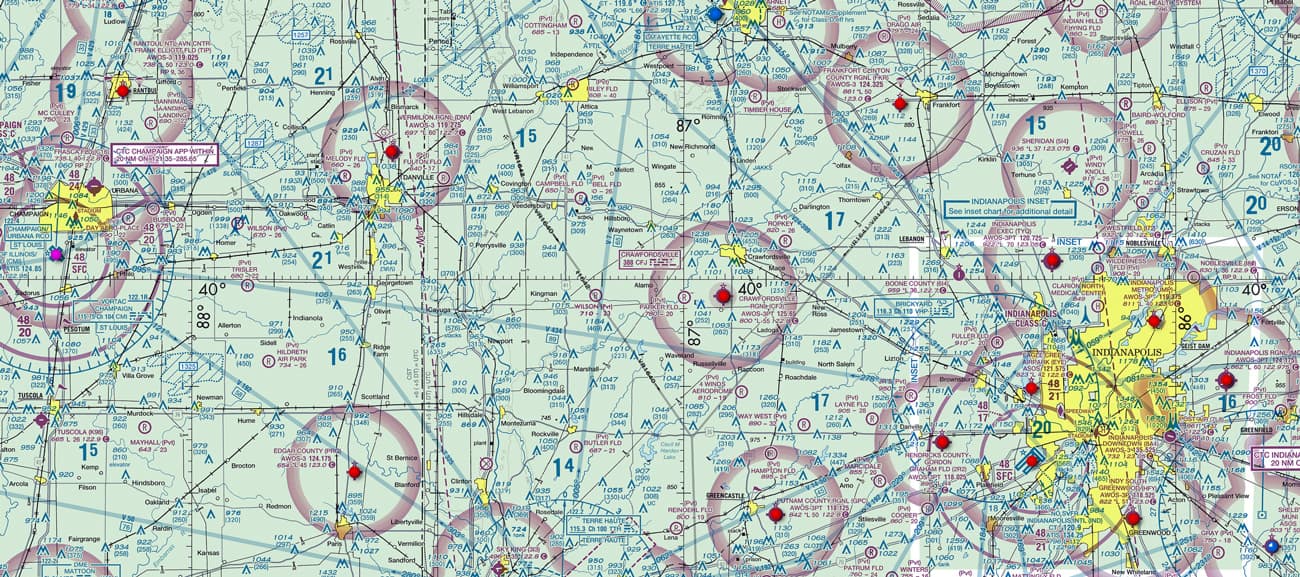
Choose a Launch Site Outside Controlled Airspace
Launch your balloon outside of controlled airspace. You can easily check this using SkyVector (https://skyvector.com/). Simply select a launch site outside the purple circles (controlled airspace zones).
Do You Need FAA Approval?
If the above criteria are met, no prior FAA approval is required.
However, it is recommended to submit a NOTAM (Notice to Airmen) 6–24 hours before launch. If launching within controlled airspace, submitting a NOTAM is mandatory.
A NOTAM can be done easily via phone and typically includes:
- Planned launch date and time
- Launch location
- Expected ascent rate
- Planned burst altitude (or maximum 60,000 feet)
- Estimated landing area
- Technical specifications of balloon, payload, and parachute
Submitting a NOTAM is simple and can usually be completed within two minutes. The guides included in our Weather Balloon Kit will assist you step by step.
When Additional Regulations Apply
If the limits mentioned above are exceeded — for example, due to a heavier payload — FAA Part 101 Subpart D applies. This introduces significantly more regulatory and technical requirements. In addition, cloud coverage at the time of launch must not exceed 5/10. For this reason, we strongly recommend planning your flight within the standard limits of Part 101.1.
Important Notice
Stratoflights expressly states that no guarantee or liability is assumed for the accuracy, completeness, or timeliness of the information provided on our website. In all cases, you are responsible for independently verifying the current legal situation with the relevant authorities.